Bio Kagoshima Matcha 50g by MyCupOfTea
I ordered this one via the Cha-Do website, where I also got the South Korean Garucha Matcha from that started this blog. :)
General Info
As the name says, this matcha is coming from Kagoshima in Japan and it's made from Tencha leaves. At the time of ordering (and writing), it cost 19,99 Euro for 50g. It was unavailable for quite some time before I was able to order it, and the shop site promises a great flavor with a bit of umami and sweetness, an excellent "ceremonial" matcha with a deep green color, so I was looking forward to it.
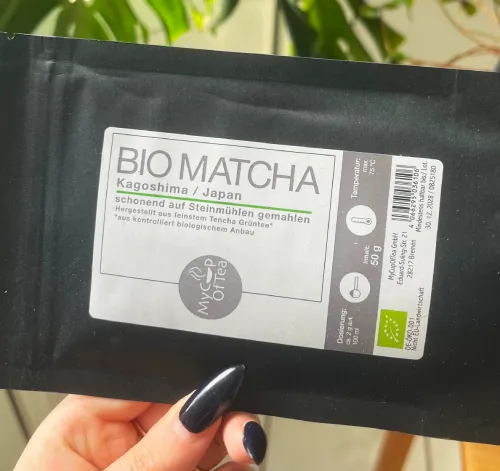
Color and Smell
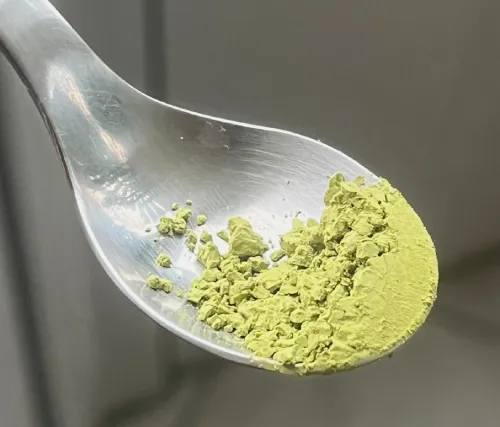
The color is rather pastel, slightly oxidized, light green when opening the bag fresh. Not as deeply green as I had hoped or am used to from other, more expensive brands, but it's still okay. As time goes on, the color becomes worse, more muddy.
Unfortunately, this is on brand for these sort of bags. In my experience, buying the same product in a 40g tin vs. a 50-100g bag, the bag always has the shittier color from the getgo, and the color degrades faster. No matter how diligently you close and store it, even if you double-bag it and store it in the freezer, it just happens and already arrives that way, which is why I always favor tins, and tend to avoid bags if I can (availability).
The smell isn't anything particularly enticing; it's not nutty or sweet or herbal, it just burns in your nose because of how grassy and astringent it is.
Something I noticed is that the powder is rather... dry-dry. Very ashy-dry in comparison to greener, fresher powders. It very easily gets swept up by any movement and little wind, especially while frothing it; fresher, greener powder still has a tiny bit of moisture which makes it heavier and less prone to flying around, making you cough.
Taste
It's a rather bitter matcha, but at least not coarse, or clumping easily. It gets the job done and is the average, affordable matcha. Sadly, not nearly as special or tasteful as advertised.
I think this tastes like any matcha you get in the average café, the ones who specialize in coffee and have included a matcha option the past few years, picking an affordable product and maybe not being as diligent with storage as they should. They are fine, but they also tend to be a intensely grassy-bitter with a more muddy color. If you like the average matcha you get in cafés that don't specialize in matcha (or tea in general) and do not care for color, you'll also like this one.
I know this is sometimes difficult to convey over writing and oftentimes seems pretentious to people not deeply into matcha, but if you're more familiar with coffee, it's kinda how iced coffee in a Tetrapak in the fridge at a supermarket, the coffee in a café, and the specialty coffee beans you have at home that you prepare in a fancy machine are all coffee, but taste differently. But the Tetrapak one might still advertise some quality about the coffee that, yes, coffee tends to have, but is likely not that present in the final product because it's made from cheap beans and not fresh.
Conclusion
I am really conflicted; I see a lot of similarities between this one and the Garucha Matcha which I rated five, but I like the latter's color more, I think its taste is slightly more diverse, and tins are easier to use and better for storage than these bags. I'd rather someone try the Garucha Matcha 40g for 11,50 Euro for a cheaper but still enjoyable beginner matcha experience, than get 10g more of slightly worse matcha for 20 Euro in a shitty bag.
It's a good example to show why the term "ceremonial" isn't protected and doesn't have to fulfill any standards. In my experience, if a product description focuses more on stereotypical cultural aspects ("Drink this zen beverage and live in ultimate harmony!" etc.) than the actual product aspects, it tends to be hype/touristslop.
🍵🍵 2 out of 5 matcha bowls.